
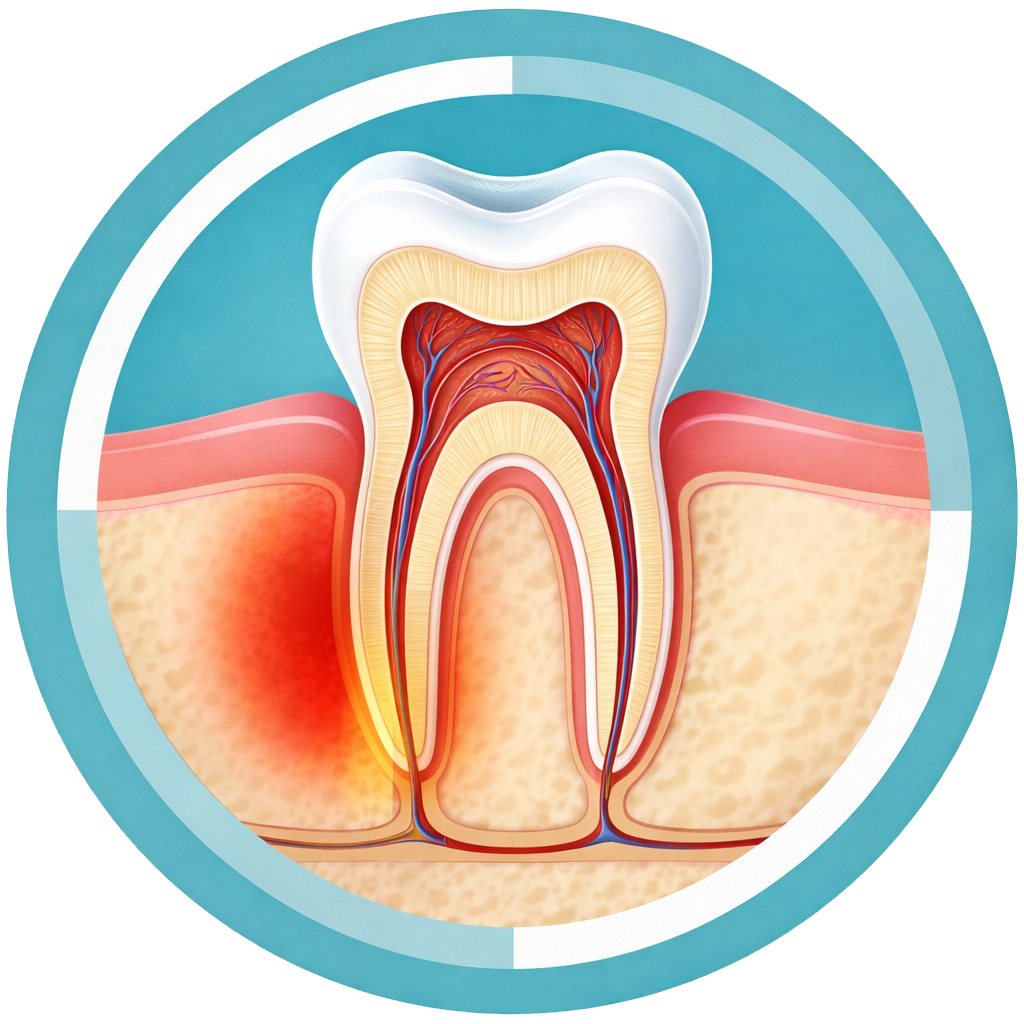
A tooth that has previously undergone root canal treatment can sometimes develop persistent or recurrent inflammation or infection. Possible contributing factors include complex or previously untreated canal anatomy, leakage around an existing restoration, new decay, cracks or recontamination of the root canal system.
These findings do not automatically mean that retreatment is required. Assessment considers the condition and restorability of the tooth, the previous treatment, surrounding tissues and the reasonable treatment options available.
Depending on the diagnosis, options may include monitoring, non-surgical root canal retreatment, surgical endodontic treatment, extraction or another clinically appropriate approach.
Root canal retreatment can be technically more complex than initial root canal treatment because the tooth has already undergone previous dental procedures. The likely benefits, limitations, risks and alternatives depend on the individual tooth and should be discussed following clinical assessment.
At JCV Endodontics, patient care is approached with clarity and consideration.
The clinical environment and communication style are designed to support understanding and reduce uncertainty throughout treatment. Patients are guided through each stage so they can make informed decisions about their care.
During an initial root canal treatment, the root canal system inside the tooth is cleaned, shaped, disinfected and sealed.
In some teeth, inflammation or infection may persist or develop again after the original treatment.
Root canal retreatment involves reopening the previously treated tooth so the existing root canal filling materials can be removed as required. The root canal system can then be examined again, cleaned and treated before being resealed when appropriate.
Retreatment is generally more technically complex than initial root canal treatment because the tooth has already undergone previous dental procedures and may contain restorations, posts or other materials that affect access to the canals.
Root canal systems can have complex anatomy. A tooth may contain narrow canals, curved canals, branches or anatomical areas that can be difficult to identify and treat.
A previously treated tooth may require further assessment for several reasons, including:
The presence of one of these factors does not automatically mean retreatment is appropriate. Diagnosis requires individual clinical assessment.
A tooth that has previously undergone root canal treatment can sometimes develop symptoms.
These may include:
Some problems associated with previously treated teeth may also produce few or no noticeable symptoms and can instead be identified during a dental examination or imaging.
Pain does not by itself establish that a previous root canal treatment has failed. Other dental conditions can produce similar symptoms, so identifying the source of the problem is an important part of assessment.
Read more about why a tooth with previous root canal treatment can still hurt.
Before recommending treatment, the endodontist needs to determine what is happening and whether further treatment is appropriate.
Assessment may include:
JCV Endodontics uses modern imaging, magnification and precision instruments to support diagnosis and treatment planning. The findings and reasonable treatment options can then be discussed before a decision is made.
The procedure varies according to the tooth and the previous dental work.
Where non-surgical retreatment is considered appropriate, treatment may involve:
The tooth is reopened to provide access to the previously treated root canals. Existing restorative materials may affect how this is approached.
Previous filling materials are removed as necessary to allow the root canal system to be examined and treated again.
Posts, crowns or other restorative components can make retreatment more complex and are considered individually.
Magnification and appropriate imaging can assist the endodontist in examining the internal anatomy of the tooth and identifying areas requiring further treatment.
The accessible root canal system is cleaned and prepared again.
When clinically appropriate, the canals are refilled and sealed.
A temporary restoration may be required before the tooth receives its definitive restoration.
The exact sequence, number of appointments and treatment requirements depend on the individual tooth and clinical findings.
Root canal retreatment is not appropriate or technically possible in every case.
Factors that can affect the treatment options include:
These factors need to be considered together rather than assuming that retreatment, surgery or extraction is automatically the appropriate option.
Non-surgical retreatment is one possible approach to a previously root canal-treated tooth. In other situations, surgical endodontic treatment may be considered.
Endodontic surgery can provide access to parts of the root and surrounding tissues through the gum rather than through the crown of the tooth.
Which approach is appropriate depends on the diagnosis, previous treatment, restorability of the tooth and other clinical factors. In some circumstances neither retreatment nor surgery may be considered suitable and extraction may form part of the treatment discussion.
The purpose of assessment is therefore not simply to determine whether retreatment can technically be performed, but whether it represents a reasonable treatment option for the individual tooth.
One reason root canal retreatment may be considered is to determine whether a previously treated natural tooth can continue to be maintained.
Preserving the tooth is not possible in every case, and retreatment cannot guarantee healing or long-term retention of the tooth.
The condition of the tooth, root structure, existing restoration, surrounding tissues and ability to adequately restore the tooth all influence treatment planning.
Alternatives and limitations should therefore be considered as part of the decision rather than assuming that retaining or removing a tooth is automatically preferable.
Local anaesthetic is used to numb the treatment area during endodontic procedures.
Individual experiences vary, and it is not appropriate to guarantee that treatment will be completely pain-free. Some patients experience temporary tenderness or discomfort following treatment.
Patients concerned about treatment or dental anxiety can discuss this with the clinical team. JCV Endodontics also provides information about sedation for root canal treatment, which may be considered for selected patients following appropriate assessment.
The requirements after treatment depend on the tooth and procedure performed.
Your endodontist will provide instructions relevant to your treatment.
In many cases, further restorative treatment by your general dentist is important following endodontic treatment. A suitable final restoration helps protect the tooth and limits contamination of the treated root canal system.
Your endodontist will explain when you should return to your dentist and any precautions relevant to your particular tooth.
The cost of retreatment varies because previously treated teeth can differ substantially in complexity.
Factors can include:
JCV Endodontics currently provides general fee information on its root canal cost in Perth page.
An individual estimate can be provided where practicable after the treatment requirements have been assessed. Private health insurance benefits vary according to the patient’s policy and insurer.
JCV Endodontics is a specialist endodontic practice located at 348 Oxford Street, Leederville, Western Australia.
The practice provides root canal treatment, root canal retreatment and surgical endodontic treatment for patients from across Perth.
Patients may attend following referral from their dentist or contact the practice to clarify the appropriate appointment pathway for their circumstances.
Dentists can also access the JCV Endodontics referral information.
A previously root canal-treated tooth can develop a new or persistent problem months or years after treatment. Possible causes include new decay, deterioration of a restoration, cracks, contamination or aspects of the root canal anatomy that require further assessment.
Not necessarily. Dental pain can have different causes. Persistent or recurring symptoms in a previously treated tooth require assessment to determine their source.
No. Imaging findings form one part of the diagnostic assessment. The tooth, symptoms, previous treatment, restorability and surrounding tissues need to be considered before determining whether treatment is indicated.
It can be. Previous filling materials, restorations, posts and the underlying root canal anatomy can make access and treatment more technically complex.
Retreatment may allow some previously treated teeth to be maintained, but this cannot be guaranteed. The likely benefits, limitations, risks and alternatives depend on the individual tooth and should be discussed following clinical assessment.
Depending on the diagnosis, options may include monitoring in selected circumstances, endodontic surgery, extraction or another approach recommended by the treating practitioner.
Patients may attend after referral or contact the practice to clarify the appropriate appointment pathway for their circumstances.
Fees depend on the tooth and complexity of treatment. See JCV Endodontics’ root canal cost information for current general guidance.
If your dentist has identified a concern with a previously root canal-treated tooth, or you have been referred for specialist endodontic assessment, JCV Endodontics can assess the tooth and explain the findings, reasonable treatment options and relevant limitations.
Contact JCV Endodontics in Leederville for practice and appointment information.
Important information: This page provides general information only. Whether root canal retreatment or another form of treatment is appropriate depends on individual clinical assessment. Information on this website does not replace diagnosis, informed consent or advice from your treating dental practitioner.
If you have questions for our team at JCV endodontics, please don’t hesitate to contact us.