
Dental infection control in Australia follows published national standards. Individual practices do not get to set their own rules. Practices can also choose to have an independent agency check that they meet those standards.
This page explains the standards JCV Endodontics works to, and who checks that we meet them.
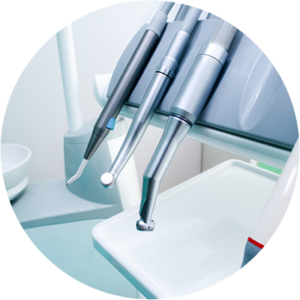

A practice cannot award itself accreditation. An independent agency does the assessment, and it assesses against a published set of national standards.
JCV Endodontics holds Dental Practice (Private) accreditation with Quality Innovation Performance (QIP). QIP is an accrediting agency approved under the Australian Health Service Safety and Quality Accreditation Scheme.
You do not have to take our word for that. QIP publishes a public register of every organisation it currently accredits, and this practice appears on it. Search Leederville, WA in QIP’s accredited organisation directory.
Accreditation is voluntary for private dental practices. It looks at how a practice is governed, how it partners with patients, and clinical safety, including dental infection control.
It also expires. QIP reassesses each practice on a recurring cycle, and removes any organisation whose accreditation lapses. So if a practice appears on that register today, it holds accreditation today.
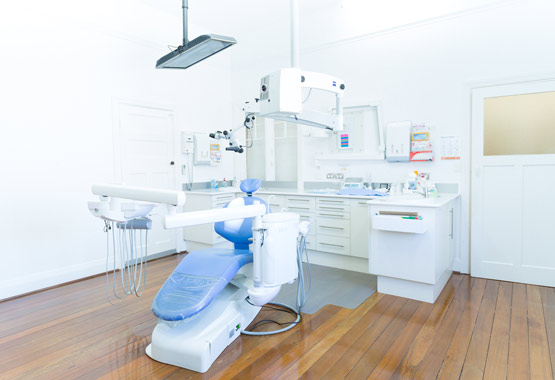
These are public documents. You are welcome to read them, and welcome to ask us how any part of them applies to your appointment.
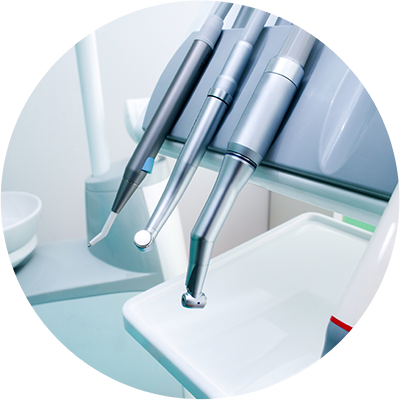
Together they cover how a dental practice handles instruments, surfaces and waste. Here is what they ask for.
Cleaning comes first, because nothing can reach sterility while soil remains on it. Inspection comes next, to check for cleanliness and damage. Then packaging. Then steam sterilisation in a monitored steriliser. Finally, storage that keeps the packaging intact until use.
If a package arrives damaged, wet or unsealed, it fails. It goes back through the sequence.
AS 5369:2023 calls this batch control identification. The record shows the date, the cycle or load number, and which steriliser ran it. That way a practice can trace instruments back to the cycle that processed them.
Manufacturers design some items for one episode of care only. Needles, syringes, gloves and suction tips are common examples. The rule here is simple. A single-use device must never go through reprocessing, and it must never serve a second patient.
Standard precautions apply to every patient, every time. Practices work this way because infection status is not always known, so the sensible approach is to treat every case the same. It says nothing about any individual patient.
Hand hygiene happens at five defined moments: before touching a patient, before a procedure, after a procedure or exposure to body fluids, after touching a patient, and after touching that patient’s surroundings.
Gloves go on for every clinical procedure. Masks, protective eyewear and protective clothing follow whatever the procedure calls for.
The standards also cover the room itself. Touched surfaces need either a single-use barrier that goes in the bin afterwards, or cleaning and disinfection between patients.
Clinical staff keep their immunisation current, in line with the current edition of the Australian Immunisation Handbook. Contaminated and sharp waste needs separating at the point of use, then disposal through clinical waste handling.

Root canal treatment is, in essence, an infection control procedure. The treatment removes infected tissue and bacteria from inside the tooth. So keeping new bacteria out during the procedure is not a side issue. It is part of the treatment itself.
That is why three things matter while the tooth is open: isolating it from the rest of the mouth, disinfecting the root canal system as it is shaped, and sealing the canals afterwards. These are core parts of endodontic technique, not optional extras. Restoring the tooth promptly afterwards, usually with your general dentist, protects that seal.
Outcomes vary between patients and between teeth. No treatment can be guaranteed. What these steps do is give the tooth good conditions for healing, within the limits of the diagnosis.
Read more: Root Canal Treatment · Root Canal Re-Treatment
Your medical history matters. Please tell us about any bloodborne virus, immune condition, current infection, or allergy, including latex. Mention any recent illness too. And tell us again on the day if anything has changed.
We do not ask so that you can be treated differently. Standard precautions apply to every patient regardless. We ask because some conditions and medications affect how we plan your treatment and how you heal. Sometimes we also need to speak with your doctor.
Our Privacy Policy and the Australian Privacy Principles govern how we handle your health information.
No healthcare setting can reduce risk to zero. These standards keep it as low as it reasonably can be. Just as importantly, they make the process documented and checkable, rather than something you simply have to trust.

Do you have a question about your appointment? Please ask. Talk to reception, or raise it with your endodontist at your consultation.
Call (08) 9443 8200 or contact us.
Referring dentists can find our referral pathway on the Refer a Patient page.
If you would like to learn more about post-op pain management,
please use the link below.